AI & Music Technology: How Artificial Intelligence Is Transforming the Music Industry
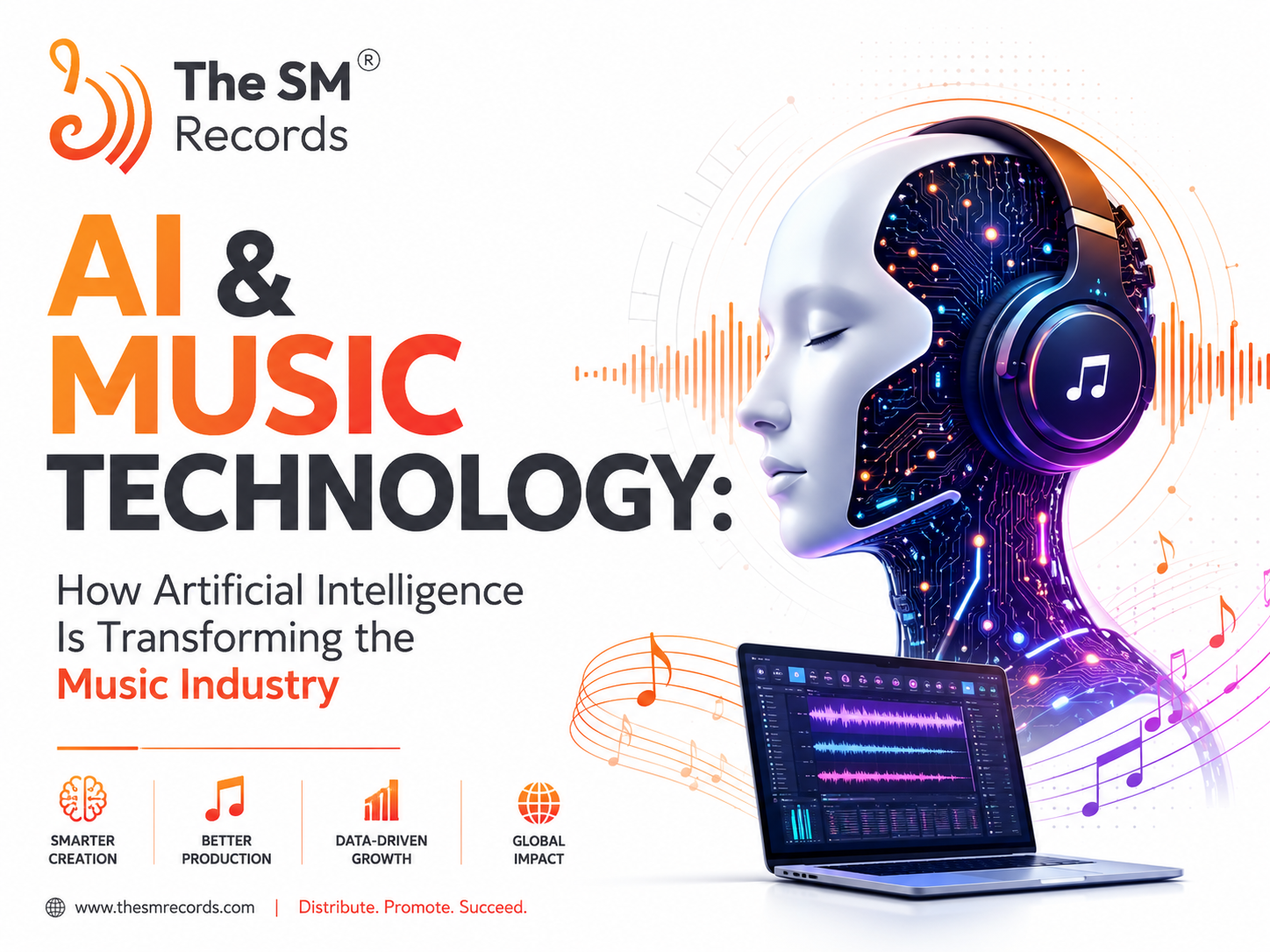
AI is no longer just a futuristic concept—it has become a practical tool that helps musicians write songs, produce music, market releases, analyze audiences, and grow their careers. For independent artists especially, AI offers opportunities that were once available only to major record labels with large budgets.
In this article, we'll explore how AI is reshaping the music industry and how artists can use these powerful tools alongside a trusted music distribution platform to build successful careers.
What Is AI in Music?
Artificial Intelligence refers to computer systems that can perform tasks that normally require human intelligence. In the music industry, AI can analyze data, recognize patterns, generate creative ideas, automate repetitive tasks, and provide insights that help artists make smarter decisions.
Rather than replacing musicians, AI is becoming a creative assistant that saves time and improves productivity.
How AI Is Changing Music Creation
1. Faster Songwriting
Many AI-powered tools can help artists generate lyric ideas, suggest chord progressions, or even create melodies based on a chosen style or mood.
Instead of starting with a blank page, musicians can use AI to overcome creative blocks and discover new musical directions.
Remember, though, that your unique voice, experiences, and emotions are what truly make your music special. AI should inspire creativity—not replace it.
2. Smarter Music Production
Modern AI tools help producers by:
- Removing background noise
- Cleaning vocals
- Suggesting EQ settings
- Mastering tracks automatically
- Improving audio quality
These tools allow independent artists to produce professional-quality music without spending thousands of dollars on expensive studio sessions.
3. Better Mixing and Mastering
Mixing and mastering used to require experienced engineers and expensive equipment.
Today, AI-assisted mastering services can quickly analyze your song and optimize it for streaming platforms like Spotify, Apple Music, Amazon Music, and YouTube Music.
While professional engineers still offer unmatched creative expertise, AI makes high-quality mastering more accessible than ever.
AI Makes Music Marketing Easier
Creating great music is only half the journey—people also need to hear it.
AI helps artists promote their music more effectively.
Content Ideas
AI can generate:
- Social media captions
- Blog topics
- Email newsletters
- Press release drafts
- Video descriptions
- YouTube titles
- Hashtags
This allows artists to stay active online without spending hours creating marketing content.
Audience Insights
AI analytics help artists understand:
- Who listens to their music
- Where fans are located
- Which songs perform best
- When audiences are most active
- Which platforms generate the most streams
These insights help artists make smarter promotional decisions instead of relying on guesswork.
Personalized Marketing
AI can identify the types of listeners most likely to enjoy your music, allowing you to create more targeted advertising campaigns and improve engagement.
The result is more efficient marketing and a better return on your promotional budget.
AI and Music Distribution
Music distribution has become smarter thanks to AI.
Modern distribution platforms can use AI to help artists:
- Optimize metadata
- Detect copyright issues
- Monitor streaming performance
- Track royalties
- Identify release trends
- Recommend marketing opportunities
Instead of simply delivering music to streaming platforms, today's distributors can provide valuable data that helps artists grow.
AI Helps Protect Your Music
Copyright protection is becoming increasingly important as music spreads across digital platforms.
AI-powered systems can:
- Detect unauthorized uploads
- Identify copyright violations
- Monitor music usage across online platforms
- Help rights holders protect their work
This gives artists greater confidence that their music is being used appropriately.
AI Can Improve Fan Engagement
Building a loyal fanbase is essential for long-term success.
AI can help artists:
- Respond to common fan questions using chatbots
- Recommend music to listeners
- Personalize email campaigns
- Analyze fan behavior
- Improve community engagement
When used thoughtfully, AI allows artists to spend less time on repetitive tasks and more time connecting with fans through authentic content.
The Human Touch Still Matters
Despite its impressive capabilities, AI cannot replace genuine creativity.
Music is built on emotion, storytelling, culture, and personal experience—qualities that only human artists can truly express.
The most successful musicians use AI to enhance their creativity, not replace it.
Your originality, passion, and artistic vision will always be your greatest strengths.
Tips for Artists Using AI
To get the most value from AI:
- Use AI as a creative assistant rather than a replacement.
- Always review and personalize AI-generated content.
- Protect your original work and copyrights.
- Focus on building genuine relationships with fans.
- Continue improving your musical skills alongside new technology.
Use data insights to make informed career decisions.
The Future of AI in Music
AI technology is advancing rapidly. In the coming years, artists can expect even more powerful tools for songwriting, production, marketing, fan engagement, and business management.
As technology evolves, independent musicians will have greater access to professional resources that help them compete on a global stage.
The artists who embrace innovation while staying true to their unique creative identity will be well-positioned for success.
Final Thoughts
Artificial intelligence is transforming every stage of the music journey—from songwriting and production to marketing, distribution, and audience growth.
For independent artists, AI offers exciting opportunities to save time, improve efficiency, and make smarter career decisions. However, technology works best when paired with authentic creativity and meaningful storytelling.
By combining AI-powered tools with a reliable music distribution platform, artists can release music more effectively, reach wider audiences, and build sustainable careers in today's competitive music industry.
The future of music isn't about humans versus AI—it's about artists using technology to amplify their creativity, connect with fans, and share their music with the world.
Article Written By: Nowshin Nower Douti